
 Flight Path
0 / 0 lessons complete
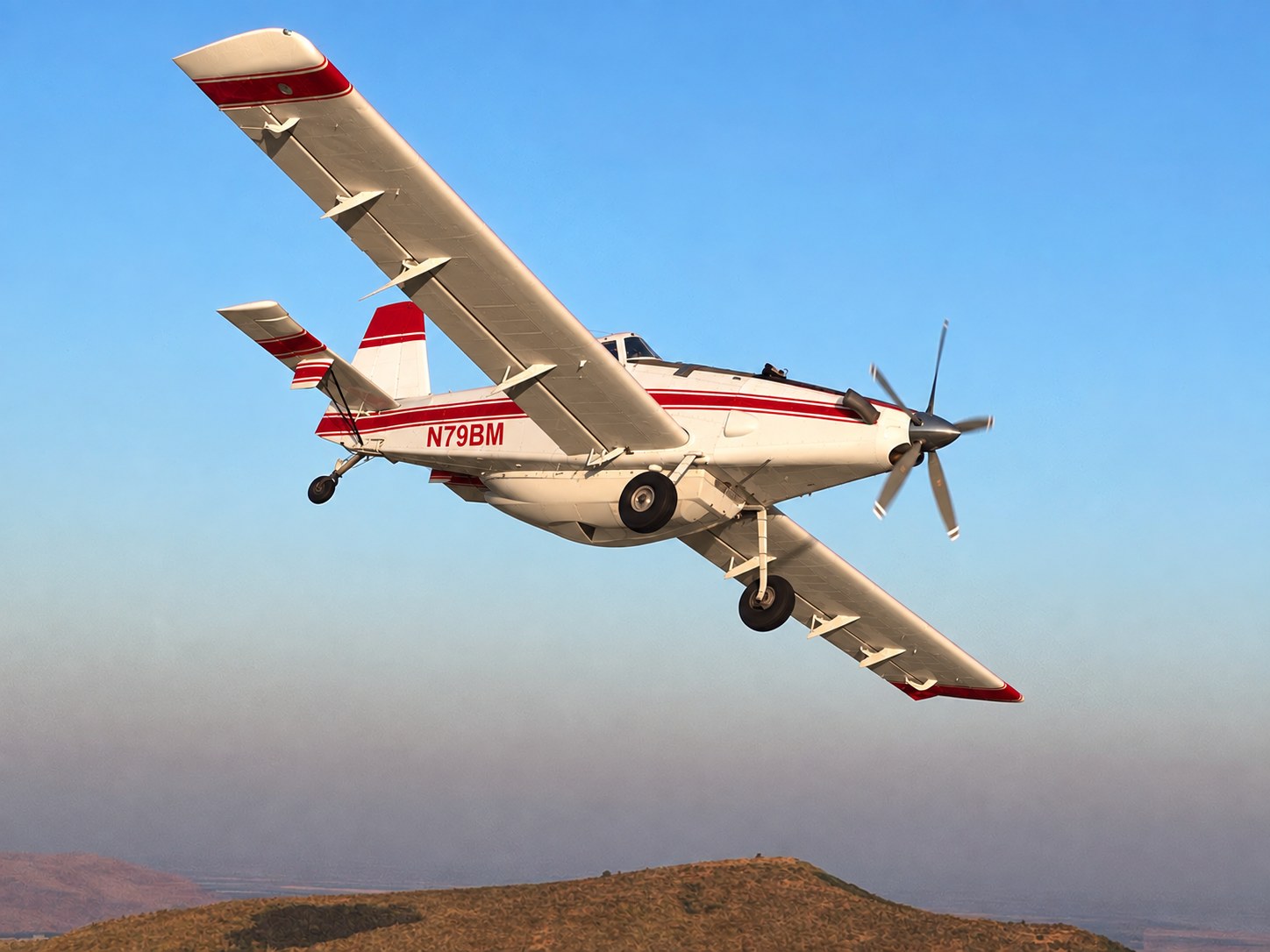
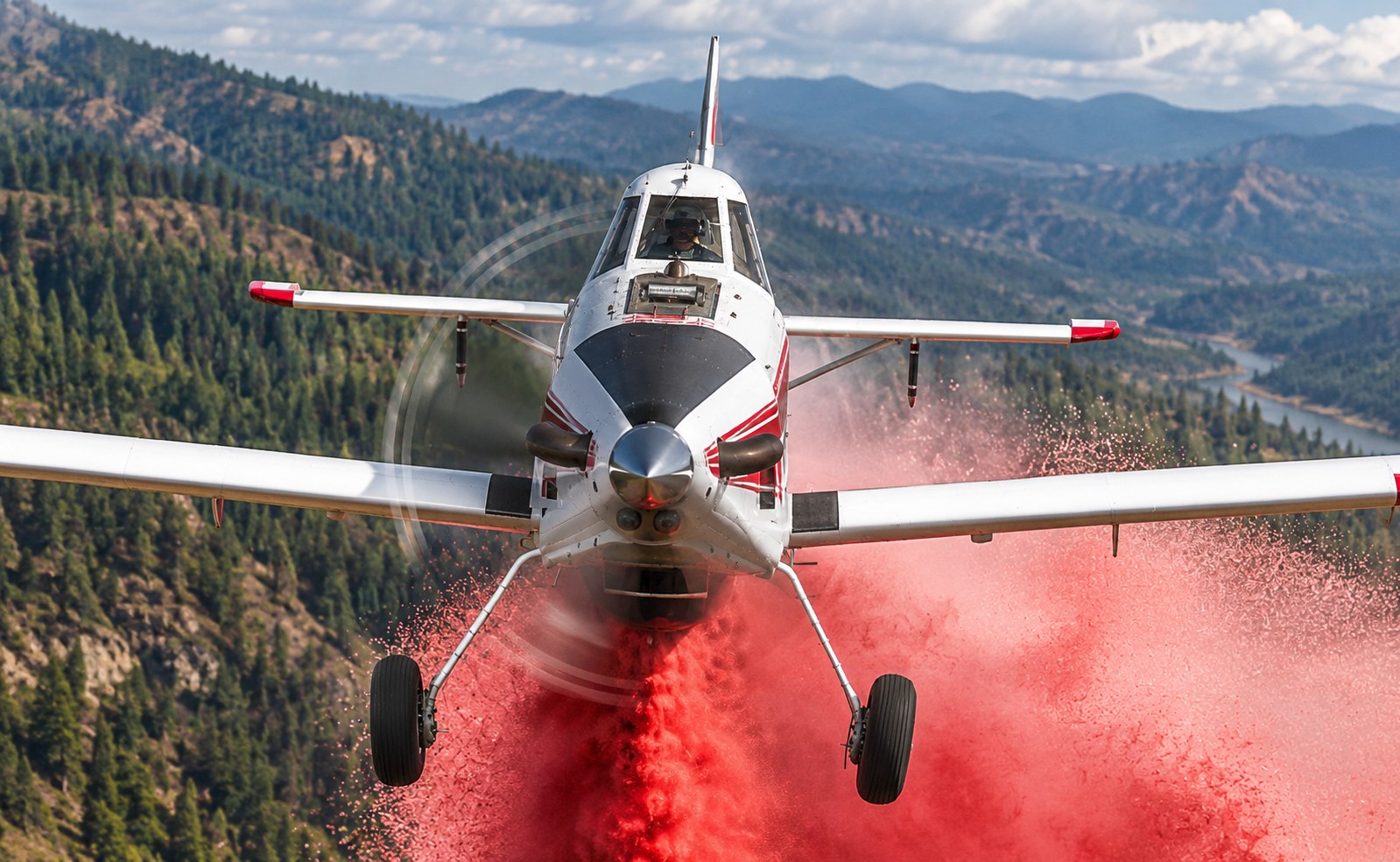
Most tanker pilots learned this job the hard way: a stack of PDFs, a few days at a carding clinic, and whatever the veteran in the next chair felt like passing on. TankerPilotEDU puts it all in one place and teaches it the way people actually learn — short lessons you can read or listen to, flashcards and knowledge checks that come back at the right interval so what you studied in March is still there in July, and real accident cases, radio procedure and contract language instead of hangar rumor. Every lesson is built from the standards and manuals the agencies publish, with the source named. Whether you are chasing your first seat or getting ready for another season, this is the ground school we wish had existed.
Built from the sources the fire agencies publish
The single-engine airtanker seat asks a lot: a heavy airplane, low over rising terrain, in smoke and turbulence, with several people directing you over a fire at once. This course covers the mission itself — the fire, the people directing you over it, the rules at the water source and the retardant base, and the paperwork that decides whether you fly this season at all.
What SEATs, LATs, VLATs and scoopers are, how the program came to be, the AT-802 fire gate and emergency dump, and the Fire Boss at the water.
Open the first track ›S-190 foundations, retardant and coverage levels, the Fire Traffic Area, aerial supervision, drop limits, radios and duty limits.
Explore fire operations ›The Interagency Pilot Qualification Card: hour minimums, Level II to Level I, the IMCS evaluation, and a self-assessment.
See carding prep ›Density altitude, ridge and canyon technique, accelerated stalls, upset recovery, ground loops and bounces, TEM, areas of vulnerability and the airtanker accident record.
Open the airmanship tracks ›Heat stress, sleep and circadian rhythm, Dunning-Kruger, home and family, helmets, Nomex, boots and the DOI-approved helmet list.
See the human-factors tracks ›VHF-FM and P25 radios, frequency guides, how contracts and duty limits work, where tanker pilots stay, and the airtanker season around the world.
Open radios and contracts ›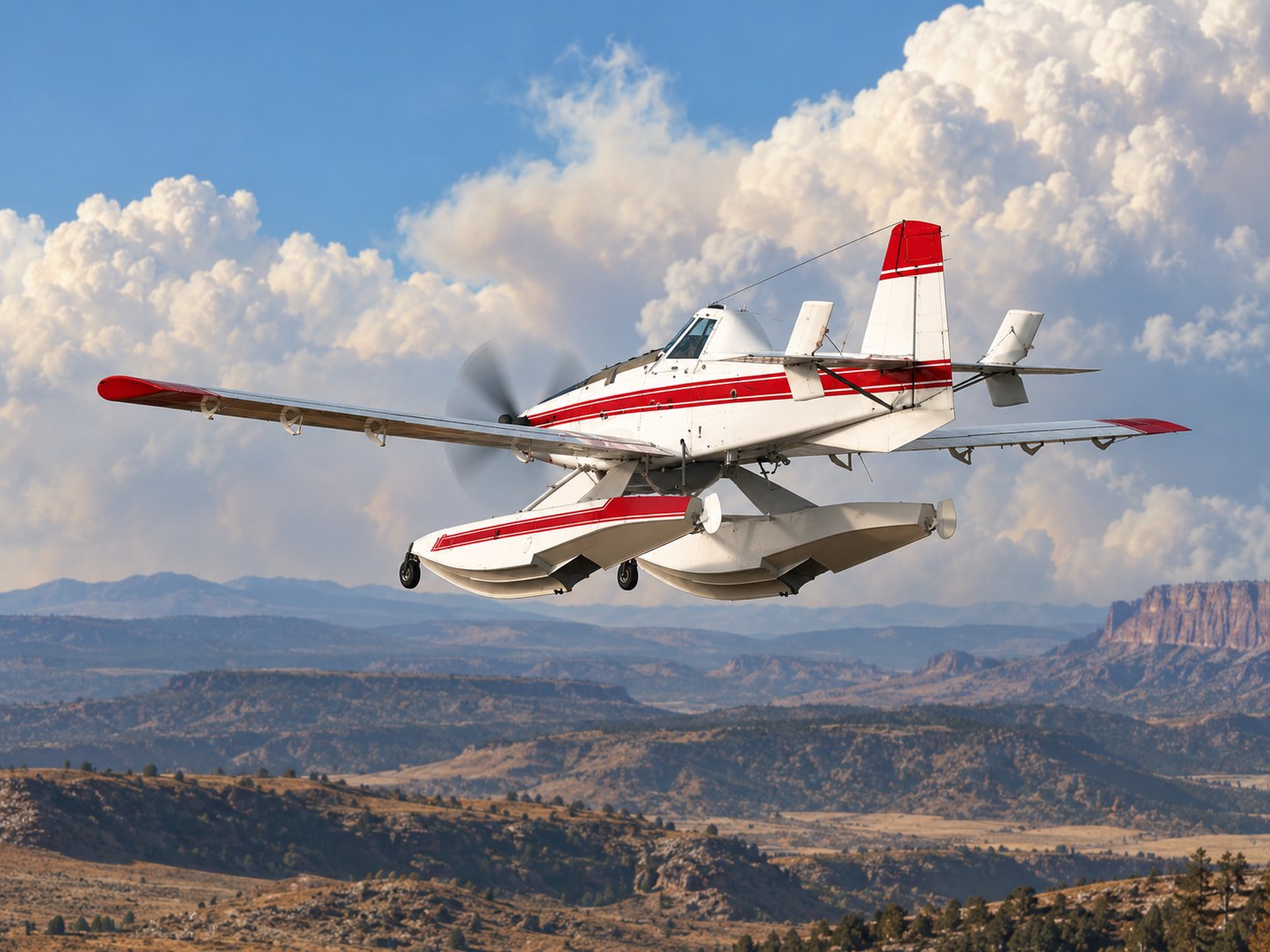
Drop heights, wind limits, water-source rules, duty limits, hour minimums — each lesson names the standard, contract or manual it came from and the edition it was read in. When the agencies revise a number, the lesson is revised from the new document, not from memory.
See our training standards ›Reading a manual once and hoping it sticks is how most pilots have always studied, and memory research has been clear for a century that it doesn’t work: you forget most of what you read within days unless you are made to pull it back out of your head, and the pull works best when it’s spaced out over time. TankerPilotEDU is built on that. Two tools do the work — Flight Path and Stay Sharp — and you’ll find both in the sidebar the moment you open the course.
Every track in the course, in order. Open a track to read it; tap “See what’s inside” to see the lesson list before you decide. Large and very large airtanker material will be added as its own group.
Benjamin Cardon grew up working a farm. By 14 he was building and flying a radio-controlled ag plane built from his own plans. He began flight training at 15 and earned his private pilot certificate on his seventeenth birthday.
His fire-aviation background started on the ramp. From 15 to 18 he was a fueler at the Pocatello air tanker base, fueling PB4Y-2s, P-2V Neptunes, DC-6s, DC-7s, P-3s, C-130s and a Hawkins & Powers C-97 — airplanes that are long gone from the airtanker world. He later flew as an Air Tactical Group Supervisor platform pilot in Twin Commanders and Cessna 414s across the Western United States.
He spent years on the line, then built a career the long way — line man, flight instructor, Part 135 instructor, and Assistant Chief Flight Instructor at Avcenter. He flew charter in light twins, hauled bank checks, and ran air ambulance routes through winter nights between Salt Lake City, Pocatello, Twin Falls, Boise, and Jackson Hole. He joined SkyWest in 2003 and has been there ever since — currently flying the Embraer 175 as a Line Captain and holding a CRJ type rating with approximately 11,000 hours in the CRJ. He holds a Bachelor of Science in Aviation Science and serves as both a Sim Check Airman and a Line Check Airman.
He is dual rated — fixed wing and rotorcraft — and flies both night ag and daytime ag. His first ag seat was a night ag operation in Yuma, Arizona. He owns and competes a Pitts S-2B and a Starduster II, with aerobatic competition wins to his name.
TankerPilotEDU is built on the same engine as his other course, AgPilotEDU, but it is its own course for its own seat, with room to grow into large and very large airtankers.
ATP · Commercial Ag · Dual Rated (AMEL / RH) · CFI · CFII · CRJ Type Rating · Part 135 Instructor · Asst. Chief Flight Instructor · Sim Check Airman · Line Check Airman · Line Captain (SkyWest, EMB-175)
Ag-Cat · Ag-Cat (Garrett turbine) · Piper Pawnee · Turbine Brave · PZL M-18 Dromader · Air Tractor 402 · 502 · 602 · 802 · Bell OH-58 · Bell 206 JetRanger · Bell 206 LongRanger · Twin Commander and Cessna 414 (ATGS platform) · Owns a Pitts S-2B and a Starduster II
Pocatello, Idaho · SkyWest operations
Whether you are working toward your first SEAT or scooper card or keeping a card current through the winter, the course is here and it is ready when you are.
Flight Path
TankerPilotEDU is still under construction and has not launched publicly yet. You are looking at a review copy, and access is free at this point for that purpose.
We are asking experienced airtanker and scooper pilots, operators and instructors to go through the course and tell us what is wrong, what is missing, and what would make it better. If you catch an error — a wrong number, a wrong procedure, anything — please say so. Every correction makes the course safer for the next new tanker pilot.
Please don't share links publicly until release. The gold button opens your email app; plain notes are welcome.